Off-grid solar operations demand industrial-grade hardware that can withstand harsh environmental conditions. Our heavy-duty dc power systems provide the 100% dependable foundation required to store and deliver clean energy safely. By pairing high-efficiency solar arrays with a robust DC backbone, the Nilemah project represents a 10% to 15% increase in long-term energy security, proving that sustainable infrastructure can be both highly efficient and exceptionally durable.
Just because you’re in a remote location, doesn’t mean you can’t have high quality technical services. Intelepower delivered a state-of-the-art solar hybrid power system for Telstra.
QUICK OVERVIEW
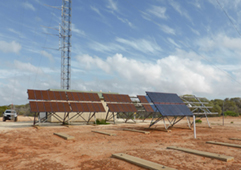
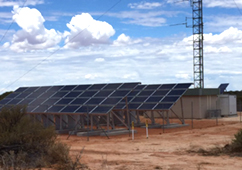
Located 267 km North of Geraldton in Western Australia, the Nilemah telecommunication site is a great example where high quality technology services can be delivered in the extreme remoteness of the Australian outback.
This project focused on upgrading or replacing the existing assets at the Nilemah site to expand Telstra’s mobile services capacity. The existing legacy solar power system was no longer suitable for proposed additional growth so Century Yuasa proposed, designed and delivered a new solar hybrid power system using existing Telstra PSA materials.
The success of the Nilemah Solar installation relies heavily on its ability to autonomously regulate fluctuating solar generation. Implementing a highly advanced dc power management system ensures that energy distribution is 100% optimised between the solar array, battery banks, and the critical load. This intelligent control network monitors system health in real time, preventing deep discharge cycles and extending the operational lifespan of the entire hardware setup.
The project was delivered over 4 months, weather was dry for the duration though a very warm mid 40 degrees every day. The site conditions were very dry with access only by a dessert track, 500 meters from the local sealed road.
Final result, site was commissioned and available for service on schedule and to budget, enabling Telstra to improve its mobile phone service offering to the region.
To ensure the Nilemah system continues to operate at peak efficiency through 2026 and beyond, we have implemented a rigorous schedule for DC battery system Maintenance & Support. Regular technical audits and cell balancing are essential to protecting the client’s capital investment and maintaining the reliability of the off-grid power supply.
SUMMARY OF WORK
- Recover existing panels and batteries
- Recover existing power system
- Install and commission solar array, battery, A/C outdoor unit and diesel generator footings
- Erect and assemble new solar array frames
- Mount and fix 260W solar panels
- Install outdoor equipment cabinet
- Install outdoor Battery Cabinets
- Install Generator with Diesel Tank
- Install batteries
- Install DC and AC power cabling
- Install underground AC and DC conduits
- Install control and alarm cabling and extend to the equipment hut
- Upgrade earthing system
- Update site data to client database
THE PROJECT
Before the first panel was installed, our engineering team conducted a comprehensive Site Analysis Electrical Assets to determine the optimal load distribution for the facility. This forensic approach allowed us to design a solar array that perfectly integrates with the existing infrastructure while maximising energy harvest in the local conditions.
Century Yuasa was commissioned to install a new solar hybrid power system after a site audit revealed that the existing Nilemah site assets needed to be replaced. It was revealed during the audit that the out-door solar panels were not compatable with the project’s proposed regulators and the existing footings were not rated for cyclonic zone C conditions. During the initial assessment, Century Yuasa also recommended recovering where possible the existing out-door solar array frames, solar panels and their footings to reduce cost.
While new footings were needed for the solar array frames, all effort was made to keep the earthing and grounding infrastructure intact as much as possible. Century Yuasa was also able to identify that the exisiting cooling fan in the equipment shelter would bring in all the humidity from outside as the site is located near the sea so a split DC air conditioner was proposed to resolve the humidity issue.
It’s rare for a remote site project to be delivered without hiccups and Nilemah was no exception. However the Century Yuasa team were able to resolve the problems.
Some of the onsite issues that occurred include;
- The two hybrid power systems were supplied direct to site without a factory acceptance test being completed. The systems needed to be configured on site with the technicians having to upload and configure the settings and troubleshoot installation issues.
- The generator was supplied direct to site without a factory acceptance test being completed and so was not configured to the sites requirements. The Century Yuasa team liaised with the manufacturer to facilitate software downloads and configuration methodology to enable the generator to be fit for purpose.
- During the acceptance and commissioning of the 192 batteries delivered, 10 batteries were found to not meet the acceptable standards. After re-testing the faulty products and liaising with the client, replacement products were arranged and supplied to site.
- After reviewing the supplied Dial Before Dig and Telstra drawings, the civil works on site found that the earth mat location was 0.5 meters from where shown. Personnel on site worked with Telsta and the Century Yuasa engineering team to prepare a new earth mat proposal with the final repairs undertaken utilising approved materials sourced locally.
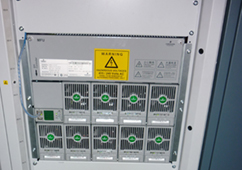
To guarantee uninterrupted supply in isolated locations, the project design incorporates a high degree of component redundancy. Utilising modular battery chargers allows the system to scale its charging capacity dynamically based on seasonal solar yield. This configuration offers an excellent opportunity for growth in site reliability, as individual charging units can be serviced or hot-swapped without taking the entire renewable storage network offline.
Sustainability was a core priority for the Nilemah project, leading to the selection of high-performance Recyclable Lead Acid Batteries. This choice not only provides a proven, robust solution for deep-cycle energy storage but also ensures that at the end of the system’s life, the components can be safely and efficiently repurposed within a circular economy.
So while the additional issues added significant delivery time to the project, the site hand over to local support staff was still completed on time.